
Last Updated: November 4, 2026
Quick Summary
Prevent railing rust by keeping water off the metal, keeping the coating intact, and inspecting on a schedule. Check joints, welds, fasteners, and the base where standing water and wet leaves collect, then clean the base and recoat any bare spot before it spreads.
- Wash railings with a degreaser and wipe off dirt before inspecting for rust stains.
- Scrub surface rust with a wire brush, then sand with 80- to 120-grit.
- Treat pitted spots with a rust converter, then prime bare metal with an etching or high-build primer.
- Skip rust converter on clean bare metal, heavy flaking rust, and stainless steel.
- Wrought iron and steel are more prone to rust, while aluminum and stainless steel resist corrosion better.
Table of Contents
- How to Remove Rust from Metal Railings Before It Spreads
- Rust Converter for Metal Railing: When to Use One and When to Skip It
- How to Prevent Rust on Wrought-Iron Railings and Other Metals
- Frequently Asked Questions
How to Remove Rust from Metal Railings Before It Spreads
Catch railing rust early and a railing lasts for years; ignore it and the metal thins from the inside out. Railing rust is a moisture problem, not a paint problem, so fix the water source first, then treat the metal.
- Wash with a degreaser and wipe off dirt.
- Inspect joints, welds, fasteners, and the base for rust stains.
- Scrub surface rust with a wire brush, then sand 80- to 120-grit.
- Wipe clean and let it dry fully.
- Treat pitted spots with a rust converter.
- Prime bare metal with an etching or high-build primer.
- Paint or seal with an exterior metal coating.
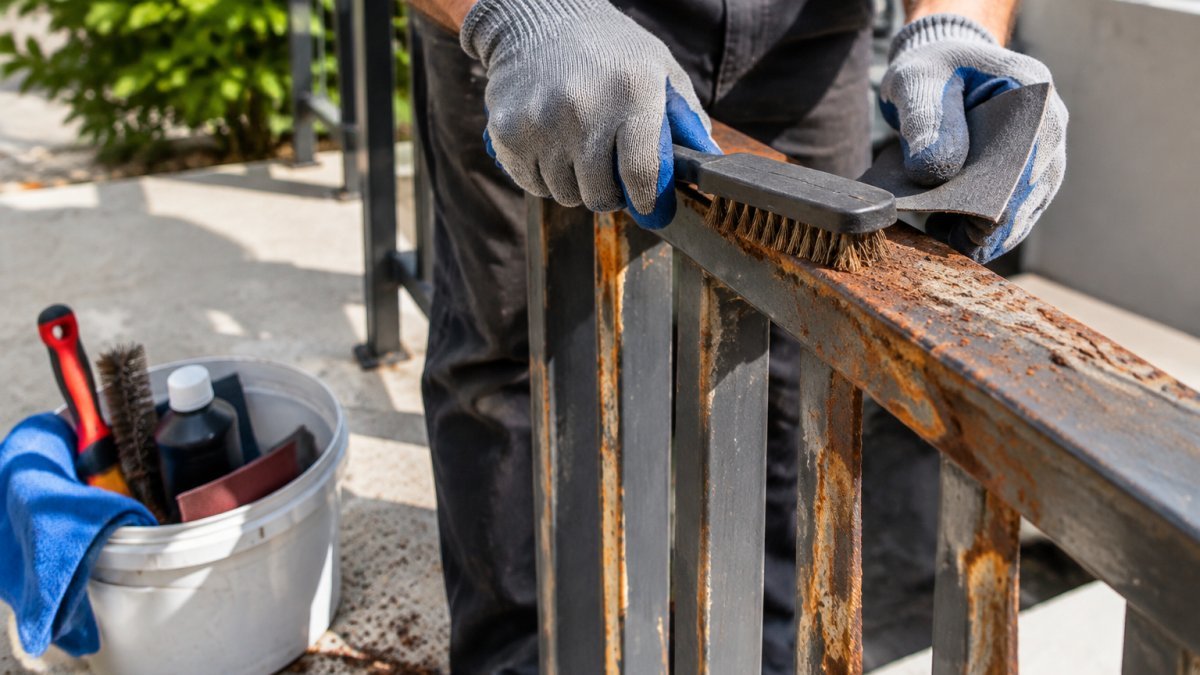
Painting over loose rust traps moisture, and the rust bleeds back within a season.
Follow these steps in order to treat railing rust before it spreads.
| Step | What to do |
|---|---|
| 1 | Wash with a degreaser and wipe off dirt |
| 2 | Inspect joints, welds, fasteners, and the base |
| 3 | Scrub surface rust with a wire brush, then sand 80- to 120-grit |
| 4 | Wipe clean and let it dry fully |
| 5 | Treat pitted spots with a rust converter |
| 6 | Prime bare metal with an etching or high-build primer |
| 7 | Paint or seal with an exterior metal coating |
Rust Converter for Metal Railing: When to Use One and When to Skip It
Use a rust converter on pitted, tightly bonded rust you cannot sand away, and skip it on clean bare metal, heavy flaking rust, and stainless steel. A phosphoric-acid-based converter turns rust into a dark protective layer you can prime and paint over. Once the converter has sealed pitted railings beneath primer and paint, the same habit of keeping moisture off metal carries over to outdoor furniture care.
How to Prevent Rust on Wrought-Iron Railings and Other Metals
Prevention comes down to three habits: keep water off the metal, keep the coating intact, and inspect on a schedule. Wrought iron and steel are more prone to rust, while aluminum and stainless steel generally resist corrosion better, which is why material choice matters in salt air.
If you are still choosing a metal, read our answer to do aluminum railings rust before you commit. We also break down the best materials for outdoor railings and explain which railing material lasts longest against corrosion. For a rust-resistant metal, see our stainless steel stair railings that last, or browse the full stainless steel category.
Inspect railings for rust regularly, checking joints, welds, fasteners, and the base where standing water and wet leaves collect. Clean the base, clear the moisture barrier, and recoat any bare spot before it spreads.
Frequently Asked Questions
Does WD-40 keep metal from rusting?
WD-40 displaces water and leaves a thin film that slows surface rust, but it is not a long-term coating. It washes off in rain and salt spray, so it works best as a short-term wipe-down on hardware or as a drying step after cleaning. For lasting protection on a railing, use a primer and topcoat or a metal sealant rated for outdoor exposure.
Can you paint over rust on a metal railing?
Only if the rust is fully removed or converted first. Paint applied over loose rust traps moisture and flakes off within a season. Wire-brush or sand to bare metal, wipe the surface clean, then apply a rust converter if pitting remains. Follow with an etching or high-build primer and a topcoat made for metal. Skipping surface preparation is the most common reason railing rust returns.
How often should you inspect outdoor railings for rust?
Check railings every three to six months in coastal or de-icing-salt areas, and once a year inland. Look closely at welded joints, fasteners, railing bases, and tensioning components where water collects. Touch up any surface rust immediately with a wire brush and sealant. A repeatable inspection schedule helps catch corrosion before it reaches structural metal.
Rust rarely starts where you expect. It starts at the joints, the fasteners, and the base, in the spots that stay wet the longest. If your project needs railings built to handle salt air and heavy use, we fabricate and install custom stainless steel, aluminum, and glass systems with factory-direct pricing and engineering support. Get a quote from Quality Railings Miami and spec a railing system that stays clean for years.
