
Quick Summary
A frameless glass railing is worth it for a balcony when an unobstructed view matters more to you than the lowest upfront cost. It works best on a solid, correctly built slab, and the three main mounting types (base shoe, floor spigot and standoff) each trade appearance against install complexity and cost.
- Choose frameless when the view is the priority; choose framed when budget or an existing edge limits the install.
- Base shoe systems look clean but the channel can trap water and debris.
- Floor spigot systems give maximum view but need a solid, correctly set slab.
- Standoff systems create an open, floating look but rely heavily on glass and anchor strength.
- Have the structure checked first, and use marine-grade stainless steel or aluminum hardware for balconies.
Table of Contents
- Frameless Glass Railing Systems Compared for Balconies
- Frameless Glass Railing for Balcony Price and Cost Drivers
- Glass Railing Hardware, Maintenance and DIY Limits
- Frequently Asked Questions
Frameless Glass Railing Systems Compared for Balconies
Frameless glass railings give a balcony the clearest view without losing safety: panels are held by posts or base hardware, not a top rail. South Florida buyers choose between a few system types, each trading off appearance, install complexity and cost.
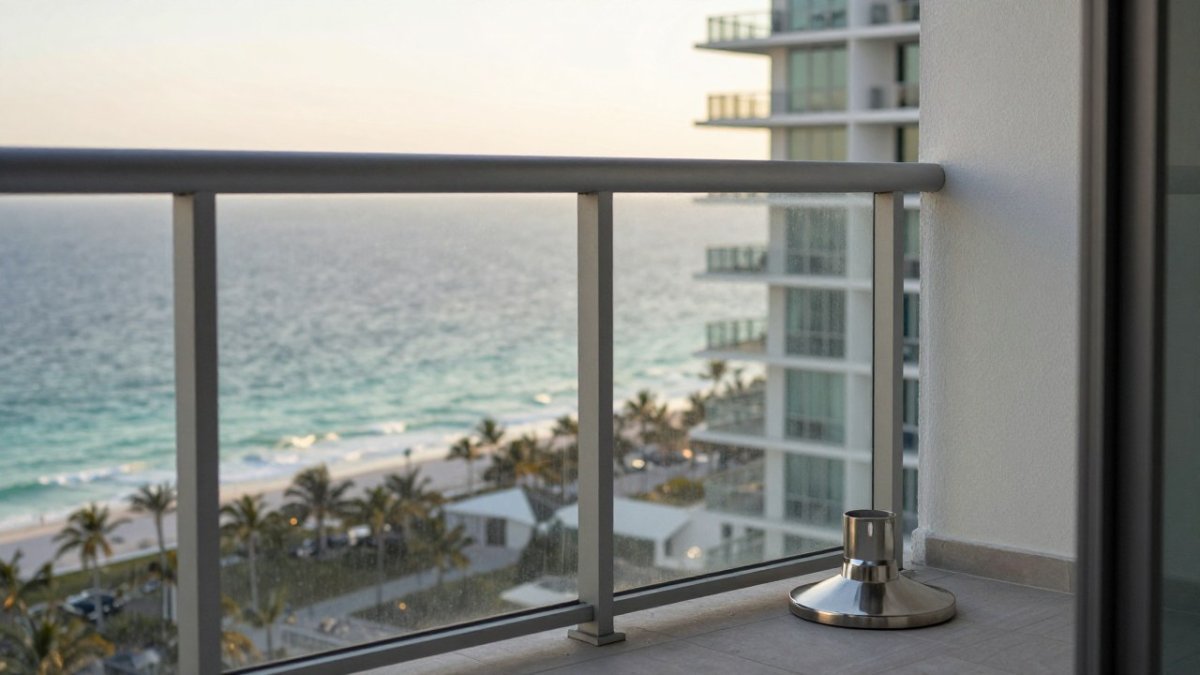
Here is how the main options compare for balconies: See a side-by-side look at frameless versus framed balcony railings.
| System Type | How It Mounts | Best For | Main Trade-Off |
|---|---|---|---|
| Base shoe (aluminum channel) | Glass sits in a channel fixed to the slab | Clean lines, balconies with a solid edge | Channel can trap water and debris |
| Floor spigot | Glass held by spigots set into the slab | Maximum view, minimal hardware | Needs a solid, correctly set slab |
| Standoff (point-mounted) | Glass held by brackets bolted through the glass | Open, floating look | Relies heavily on the glass and anchor strength |
Frameless versus framed. A framed railing wraps aluminum or steel around the glass, cheaper and easier to retrofit, but the top rail cuts the view. Choose frameless when the view is the point; framed when budget or an existing edge limits the install. Read a frank review of whether frameless glass is worth it. Compare glass railings with aluminum railings to see how the materials differ.
Balcony-specific points. Balconies face wind load, driving rain and salt air. Confirm the system is rated for your building’s height and exposure, with marine-grade stainless steel or aluminum hardware. Tempered glass is a common safety standard; laminated glass holds together if it cracks.
Common mistake: buyers compare only the glass look and skip the substrate. A standoff or spigot system is only as strong as the slab it is fixed into, so have the structure checked first.
Frameless Glass Railing for Balcony Price and Cost Drivers
Pricing for a frameless glass railing depends on the project, not a single list price. Panel count, glass thickness, hardware finish, balcony width and install access all move the total, so the most reliable number comes from a site-specific quote.
The lowest price per foot is often not the lowest total. Compare what each quote includes, glass specification, hardware grade, installation, structural check and permits, since permit work is handled separately on many projects. Get a breakdown of balcony railing replacement costs and what drives them.
Also ask whether the fabricator does factory-direct work. Ask the fabricator for a written quote showing glass, hardware and install line by line.
Glass Railing Hardware, Maintenance and DIY Limits
Hardware determines how long a frameless railing stays safe and clear. Stainless steel fasteners, marine-grade finishes and correctly rated glass clamps matter most in Miami’s salt air; cheap hardware corrodes and can loosen the glass over time.
Maintenance is light but regular: rinse glass and hardware every few months in coastal areas, check base channels or spigots for water pooling and debris, and tighten fasteners at the first inspection. Chalky white marks on aluminum or rust streaks on steel are early corrosion signs. Regular checks for corrosion and trapped water matter around pools as well as balconies, where Aluminum Fences Direct connects the same upkeep concerns to glass fencing.
DIY is fine for cleaning and tightening visible hardware. Glass installation is different: panels are heavy, must be set to exact tolerances, and need correctly rated anchors into a sound slab. Structural work typically requires a permit and inspection. Check the local permit guide for balcony railings in Miami to see which approvals apply.
For a balcony project, the safe path is a licensed installer who handles the structure, glass and permits together. Quality Railings Miami offers professional installation.
Frequently Asked Questions
How much does a frameless glass railing for a balcony cost?
Pricing depends on panel count, glass thickness, mounting hardware, balcony layout and installation conditions, so no single figure applies to every project. For current pricing or a quote for your balcony, request one directly from the company’s website, where a factory-direct model may affect the final number.
Is a frameless glass railing safe for a balcony?
A frameless glass railing is safe when the glass is tempered or laminated, the panels are sized for the load, and the base shoe or posts are anchored into structure that can carry the required forces. Balcony work should be reviewed for applicable building code compliance before installation. Cleaning and periodic inspection of fasteners help keep the system performing over time.
Can you install frameless glass railing yourself?
Some manufacturers describe post-supported and channel systems in enough detail for experienced installers, but a balcony railing is a structural and life-safety component. Anchoring into concrete, setting level posts and aligning long glass panels typically requires trained installers and permits. Professional design and installation is generally the safer route for most balconies.
