
Last Updated: November 12, 2026
Quick Summary
Glass railing systems for commercial buildings come in three main types: standoff, base shoe, and post-mounted. The right choice depends on the building’s structure, the load it must carry, and how the space will be used.
- Standoff systems attach glass with individual mounting points, creating a floating look.
- Base shoe systems use a continuous channel along the bottom of the glass, where the slab supports a linear base.
- Post-mounted systems use vertical posts with glass between them, suiting traditional rail profiles or stair handrails.
- Laminated glass is often preferred for commercial guardrails because it holds its position after breakage.
- Include design loads and the glazing specification together in the submittal to avoid plan-review delays.
Table of Contents
- Glass Railing System Types for Commercial Buildings
- Tempered vs Laminated Glass for Railings and IBC Requirements
- Commercial Glass Railing Cost per Linear Foot and Budgeting Factors
- Frequently Asked Questions
Glass Railing System Types for Commercial Buildings
Glass railing systems for commercial buildings come in several configurations, and the right one depends on the building’s structure, the load it must carry, and how the space will be used. Developers and contractors generally compare three main types: standoff, base shoe, and post-mounted systems.
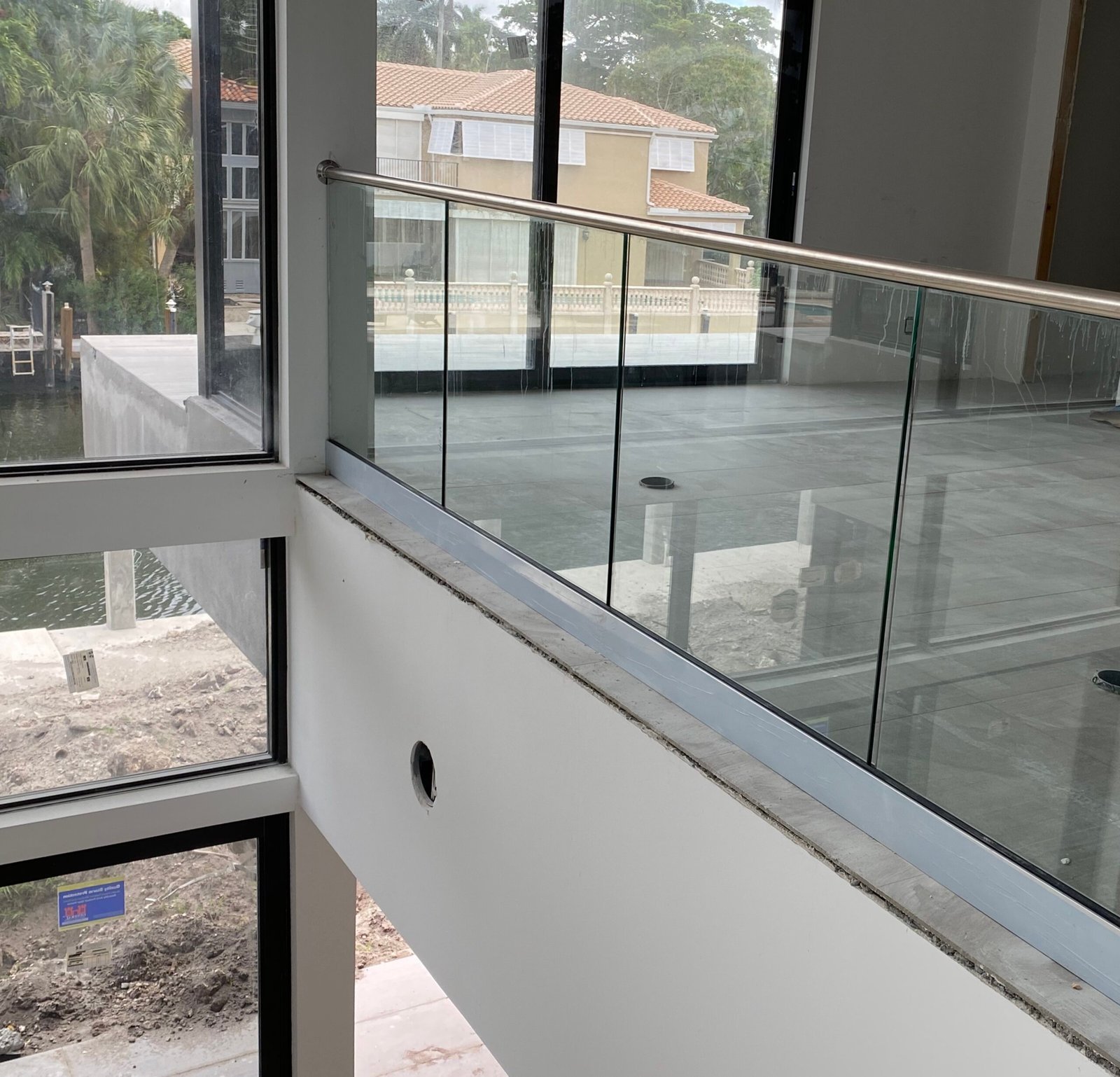
Standoff systems attach glass panels with individual mounting points, so the glass appears to float. Base shoe systems run a continuous channel along the bottom of the glass, common where the floor slab can support a linear base. Post-mounted systems use vertical posts, often stainless steel or aluminum, with glass panels set between them, suiting projects that need a traditional rail profile or a handrail on top.
Match the system to the substrate and handrail requirement first, then weigh aesthetics: a standoff system may look best on a high-rise balcony, but a post-mounted system may be more practical on a stair with a required handrail.
The article compares three main commercial glass railing system types and what each suits.
| System | Attachment | Best for |
|---|---|---|
| Standoff | Individual mounting points | High-rise balconies, floating look |
| Base shoe | Continuous channel at glass bottom | Floor slabs that support a linear base |
| Post-mounted | Vertical posts with glass between | Traditional rail profile or stair handrail |
Tempered vs Laminated Glass for Railings and IBC Requirements
Tempered glass is heat-treated to increase strength and breaks into small, dull fragments; laminated glass bonds layers with an interlayer, so the glass stays in place after cracking. Both are common in commercial work, and the choice affects design, cost, and code review. Because the choice between tempered and laminated glass shapes both design and cost, it can also inform decisions about high-quality commercial glass upgrades.
Building codes govern guard loads and safety glazing for railings. Review the specific code edition and local amendments with your building department, since requirements vary by occupancy and building height: International Building Code guard and glazing provisions
Laminated glass is often preferred for commercial guardrails because it holds its position after breakage, supporting the safety case for elevated locations; tempered glass can also meet requirements when specified and tested for the application. The architect or engineer of record should confirm glass thickness, interlayer type, and edge treatment against load calculations. Specifying glass without a load calculation for the guard is a common reason for plan-review delays, so include design loads and the glazing specification together in the submittal.
Commercial Glass Railing Cost per Linear Foot and Budgeting Factors
Cost per linear foot depends on glass thickness, system type, substrate, height, finish, and installation access. Because costs shift with material prices and project scope, we do not publish a standard figure. Pricing depends on quantity, dates, and delivery. For current pricing, request a quote through the Quality Railings Miami website.
To budget accurately, ask every supplier for the same scope in writing, including glass type, mounting, handrail, installation, and permit support; quotes that omit these items can look cheaper and cost more later. Readers can also see how factory direct railing pricing could affect their costs.
Next steps: Contact Quality Railings Miami to discuss your commercial railing project and request a quote.
Frequently Asked Questions
What type of glass is best for commercial buildings?
For most commercial glass railing systems, laminated tempered glass is the usual choice. Tempered glass is heat-treated for strength and breaks into small pieces, while laminated glass bonds two or more layers with an interlayer so the panel stays in place if cracked. Architects and building officials typically specify the glass type and thickness in the project drawings, based on the railing height, load requirements, and the applicable building code. Ask your engineer to confirm the specification for your project before ordering panels.
Do glass railings need to meet IBC requirements?
Yes. Commercial guardrails and handrails are governed by the building code as adopted by the local jurisdiction, along with accessibility rules for handrail height and graspability. Requirements cover minimum railing height, load resistance, and glass safety glazing. Because local adoption dates and amendments vary, confirm the exact edition and local amendments with your building department before finalizing the design.
How do I get an accurate cost estimate for a commercial glass railing project?
Pricing depends on linear footage, glass thickness, mounting type, hardware finish, installation conditions, and delivery timing, so no single per-foot figure applies to every project. Request a written quote that lists glass, hardware, fabrication, installation, and any engineering or permit support separately. For current pricing and a project-specific quote, contact Quality Railings Miami through its website.
