
Quick Summary
The best metal stair railing for a Miami home depends on the view, foot traffic and salt-air exposure. Powder-coated aluminum, 316 marine-grade stainless steel and coated or galvanized carbon steel each suit different conditions, and grade and finish matter most near the coast.
- Start with the view and foot traffic, then choose the infill for the staircase.
- Specify 316 marine-grade stainless, not 304, for coastal salt-air exposure.
- Powder-coated aluminum resists corrosion naturally but is softer than steel.
- Get the grade and coating system in writing on every quote.
- Ask bidders whether permit fees, engineering and inspection are included.
Table of Contents
- Metal Stair Railing Designs That Work in Miami Homes and Buildings
- Metal Railing Materials and Finishes for South Florida Coastal Conditions
- Custom Metal Stair Railings Miami Cost: What Drives the Price
- Frequently Asked Questions
Metal Stair Railing Designs That Work in Miami Homes and Buildings
A metal stair railing is a handrail and guard system built from steel, aluminum or stainless steel, usually with balusters, cable or glass infill. The right design depends on building type, desired views and how much visual weight the staircase can carry.
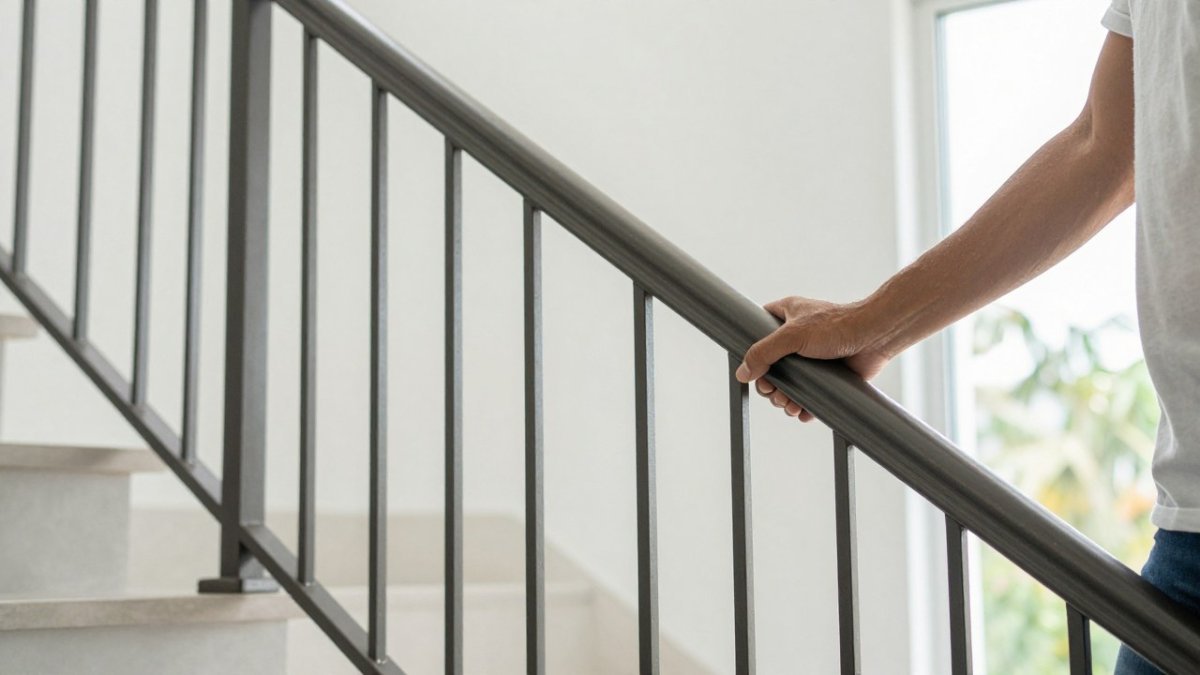
Common designs include vertical baluster rails for most residential stairs, cable railings that keep ocean and skyline views open, glass infill with metal posts for a modern look, and structural steel staircases for high-traffic commercial stairwells. Start with the view and foot traffic, then choose the infill, confirming spacing and load requirements first.
Metal Railing Materials and Finishes for South Florida Coastal Conditions
Coastal salt air accelerates corrosion, so material and finish together determine how a railing performs over years of humid, salt-laden air.
Powder-coated aluminum. Aluminum resists corrosion naturally, and powder coating adds color, UV stability and a barrier against pitting. It is light but softer than steel, so long runs and heavy traffic need thicker sections or intermediate posts.
Marine-grade stainless steel. Stainless relies on a chromium-rich passive layer. In coastal exposure the grade matters most: 316 stainless (marine grade) contains molybdenum for chloride resistance, while 304 can show tea-staining or pitting near salt water. Stainless can hold thin profiles, which suits cable and glass infill.
Coated or galvanized carbon steel. Carbon steel is strongest and most economical but rusts without protection. Hot-dip galvanizing plus primer and topcoat is standard; the failure point is usually a scratch or uncoated cut end where rust spreads. Coated steel suits interior stairs; for exposed exterior stairs near the coast, it demands more inspection and touch-up.
Glass and cable infill. Tempered glass keeps views open and cleans easily, though salt film requires regular wiping. Cable railings should use 316 hardware to match a coastal frame.
A common mistake is buying a lower grade of stainless to save money, then seeing rust spots within a few years. Ask which grade and coating system is specified for salt-air exposure, and get it in writing on the quote. Finish also interacts with code: handrails must be graspable, and a slick polished surface or oversized profile can fail that requirement even when height and spacing are correct.
The article compares the main railing materials and their coastal performance, which can be summarised as follows.
| Material | Best for | Key difference |
|---|---|---|
| Powder-coated aluminum | Long runs needing light weight | Resists corrosion naturally; softer than steel |
| 316 marine-grade stainless | Coastal exposure | Molybdenum adds chloride resistance |
| 304 stainless | Less exposed locations | Can show tea-staining or pitting near salt water |
| Coated or galvanized carbon steel | Interior stairs | Strongest and most economical; rusts if coating is breached |
Custom Metal Stair Railings Miami Cost: What Drives the Price
Pricing for custom metal stair railings depends on material, infill, finish and installation conditions.
What moves the price up or down: material and grade, infill type, design complexity, finish, installation access, and permitting and engineering.
Why permitting belongs in the budget. Stair railing work is regulated and may require a permit and inspection for height, opening and load requirements. Ask each bidder whether permit fees, engineering and inspection coordination are included.
How to compare quotes. Request an itemized quote separating frame material and grade, infill, finish, installation labor, engineering and permitting, and delivery charges.
Budgeting beyond the railing. A custom railing can be designed to match the building’s architecture. Set aside contingency for site conditions found during measurement, such as deteriorated stair framing or anchors.
For an accurate figure, request a written, itemized quote for your specific staircase. You can request a quote through the company website.
Ready to plan your railing? Quality Railings Miami fabricates custom metal and glass railings for South Florida homes and commercial buildings, with factory-direct pricing and professional installation. Request a quote and get a clear scope before you commit.
Frequently Asked Questions
How much do custom metal stair railings cost in Miami?
Pricing depends on the metal, the finish, the length and height of the run, the number of landings, and whether the job includes installation. Quality Railings Miami does not publish a flat rate for this work, so the most reliable way to get a number is to request a quote for your specific staircase. Ask the contractor to itemize materials, fabrication, delivery, and installation so you can compare bids on the same basis. Compare the full scope before deciding.
What metal is best for a stair railing in a coastal area?
Aluminum and stainless steel are the two metals most often considered for Miami properties because both resist corrosion better than untreated steel. Aluminum is lightweight. Stainless steel offers a more rigid look and should be a grade suited to salt air. Ask your fabricator which alloy and finish they recommend for your exposure.
What should I ask a railing contractor before ordering?
Confirm the material grade and finish, whether the design is custom engineered, and how the job will be checked against the applicable building code and permit requirements. Ask who handles permits, what the realistic lead time is from design approval to installation, and who is responsible if a component fails. Request a written scope that lists every item included in the price.
